Zerb — The Guild of Television Camera Professionals · Spring 2026
The Cost of the Shot
Drones, Ethics, and Wildlife Filmmaking
Wildlife filmmaking offers audiences unprecedented access to the natural world. But with that access comes responsibility — to observe without disturbing, to prioritise animal welfare over spectacle. IAWF and GTC member Sophie Darlington ASC explores an issue that’s rarely discussed openly: are drone practices in wildlife filming maintaining professional standards, or are ethical lines being crossed? Her investigation reveals a growing gap between best practice and what’s actually happening in the field.
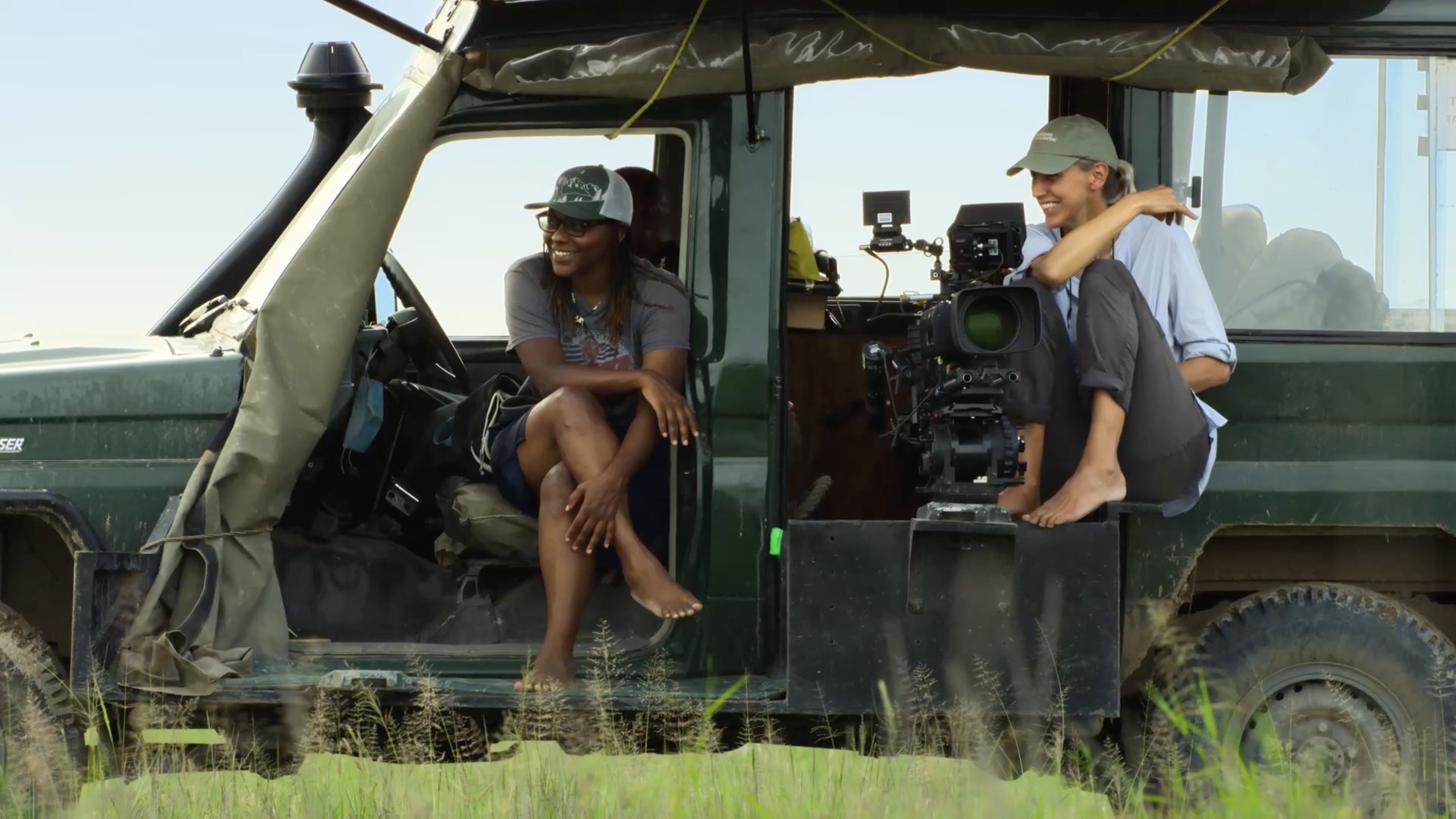
Faith Musembi and Sophie Darlington on location in Amboseli National Park, Kenya, for National Geographic’s series Queens.
First things first, I don’t fly drones. I’m a long lens wildlife cinematographer who’s spent 35 years filming the natural world from the perspective of a passionate advocate for nature – in simple terms, if it isn’t happening, don’t make it happen.
This article came about due to Zerb reaching out having seen an Instagram post in November, where I asked the question, in response to some footage I’d stumbled across with animals reacting to, and scared by, a drone: “Surely the welfare of the wildlife we’re filming should be prioritised above all else?”
To set the scene, in the 1990s on productions like Intimate Enemies: Lion and Buffalo, we had no drones, no budget for helicopters. We went old school – me in the backseat of a motorised paraglider with an ARRI HSII strapped around my neck. Bumpy as hell, far from ideal, but we got our aerials and no animals were disturbed.
Drones changed everything. They’ve democratised aerial filming overnight, given us perspectives we could only dream of, and genuinely enhanced our storytelling. I love what they enable. But lately, scrolling through Instagram or watching recent productions, I’m seeing footage that makes me deeply uncomfortable: animals clearly stressed, fleeing, reacting – maybe even provoked.
So, I did what any curious cameraperson would do: I started asking questions. I spoke to wildlife drone pilots, filmmakers, a producer, representatives from DJI, and a professional FPV (first-person view drone) pilot whose work has caused considerable controversy in the wildlife community. I wanted to understand: is my concern justified, or am I just being a ‘crusty old long lenser’?
Turns out, there’s recent peer-reviewed research that backs up what many operators already know instinctively. But the gap between best practice and what’s actually happening out there? That’s wider than I expected.
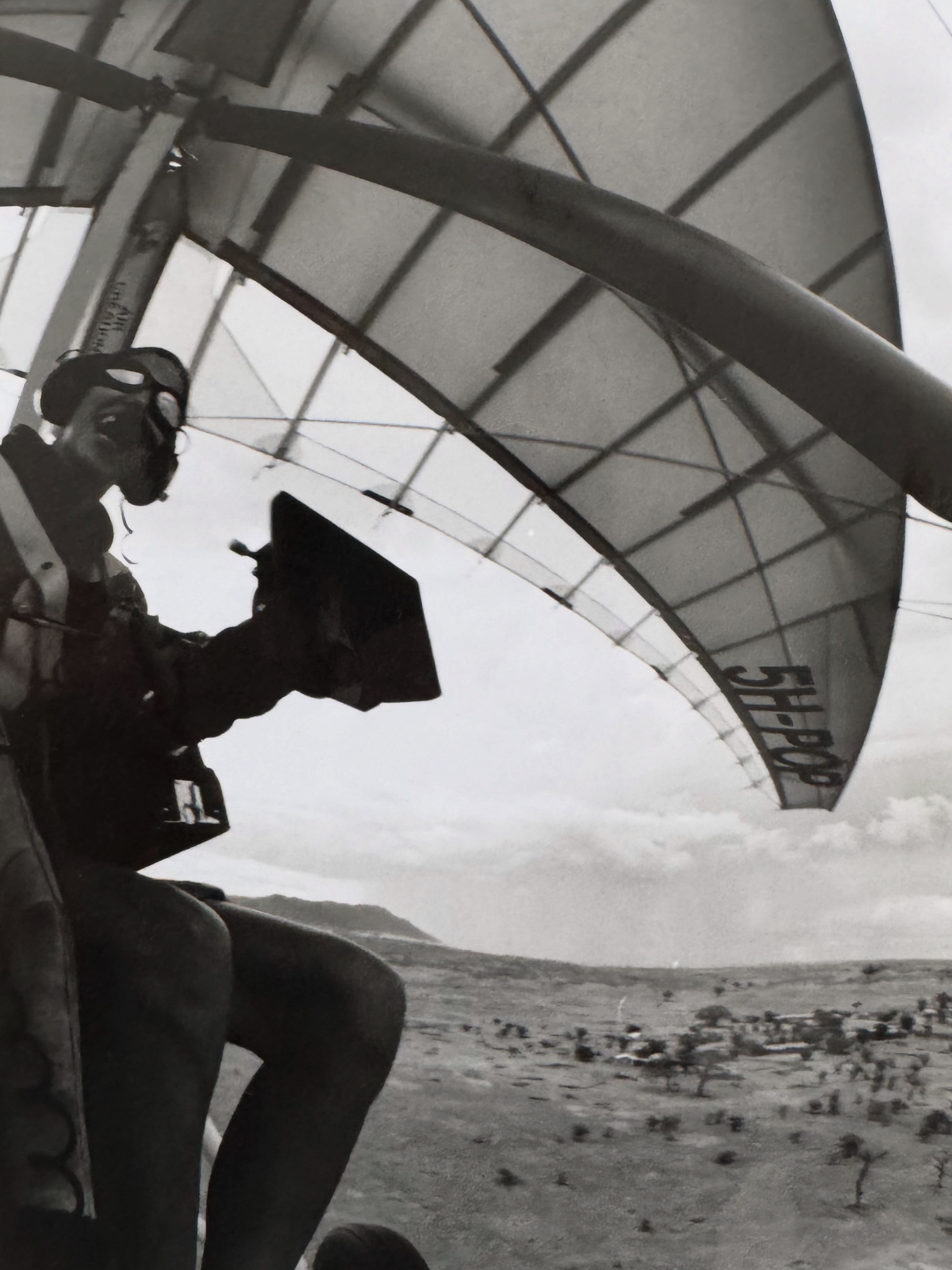
Sophie en route to capture aerial shots for Intimate Enemies: Lion and Buffalo in the late-1990s, doing it the pre-drones, ‘old school way’, from a ‘bumpy as hell’ powered hang glider with an ARRI HSII strapped around her neck with a belt!
What the research shows
Recent research published in April 2025 in the journal, Drones*, confirms what’s been worrying me. The science is clear: drone altitude, speed, approach distance, and noise levels all significantly influence wildlife responses. Animals show increased vigilance, flight responses, and physiological stress. Noise, in particular, is identified as “a critical factor” triggering rapid fight-or-flight responses in mammals. The paper emphasises “the necessity for continued research into drone-wildlife interactions, with an emphasis on the requirement to minimise disturbance by means of improved flight parameters and technology.”
I put this to the wildlife drone operators first. Anthony Njuguna, who I’ve recently worked with on a project in Kenya, confirmed that this matched his experience immediately: “Yes, fully. Each animal, each environment reacts very differently to the drone’s sound and approach.” These species-specific responses inform his approach: “Buffaloes start running. Elephants will think those are bees approaching.” The acoustic response often happens before visual contact – animals definitely react to sound they can’t yet see.
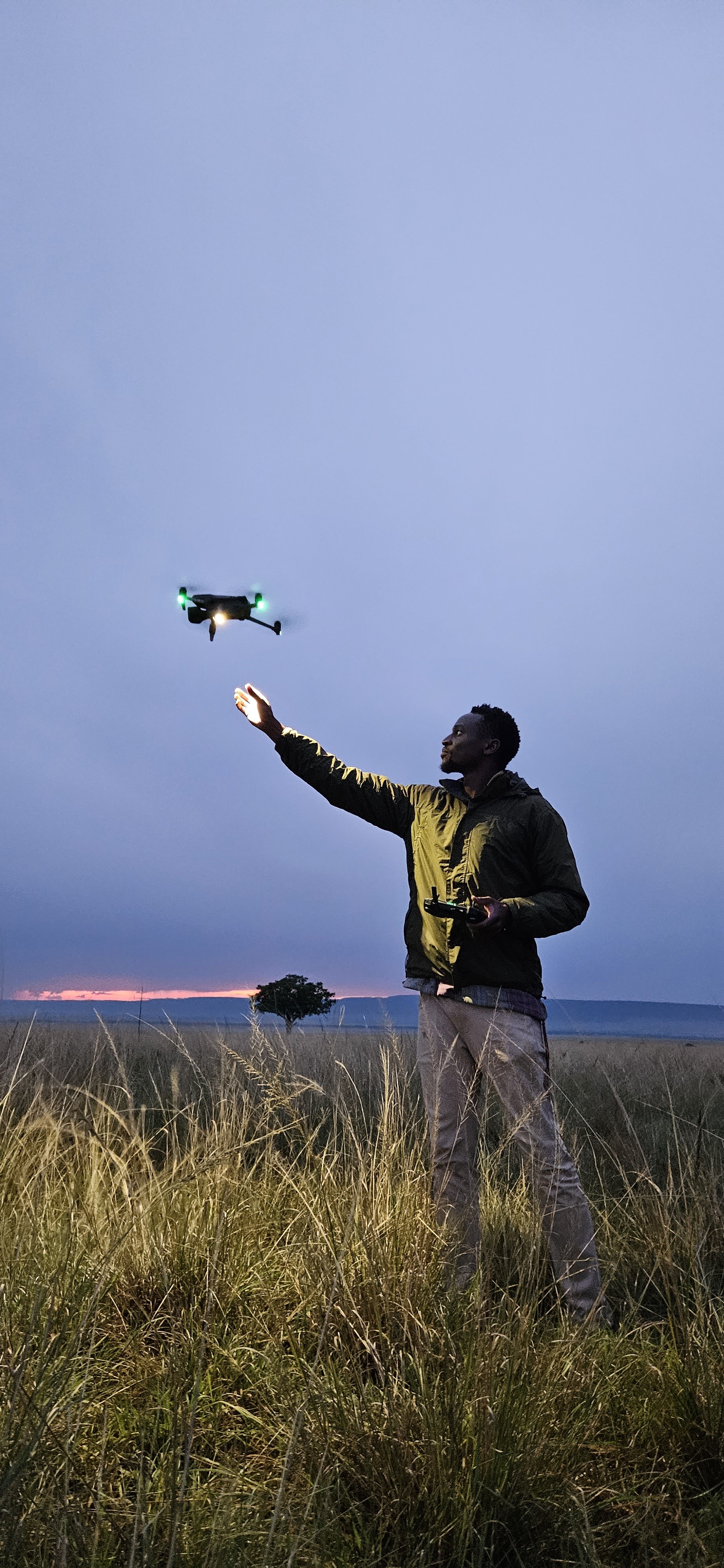
Documentary filmmaker and aerial cinematographer Anthony Njuguna launching his drone into the wild in Kenya.
Sara Matasick, who’s filmed extensively with penguins, describes her approach as a “giant bubble” – starting high and far, working slowly inward whilst watching for behavioural cues. “When parents are on eggs, and chicks are really small, the penguins are much more sensitive. Their main predators come from the sky, so to them the drone is like a skua or giant petrel. The adults will flap their wings when they get uneasy – that’s the cue to back off before they’re really upset.”
She’s also thought deeply about habituation – the process of gradually acclimatising animals to human presence, vehicles, or cameras so they behave naturally. “Habituation would be a problem when the drone is potentially numbing them to other real predators. You want to make sure the drone isn’t masking real threats and causing animals to be more vulnerable.”
This is sophisticated thinking about second-order effects – exactly the kind of comprehensive consideration of welfare impacts the research calls for.
The Instagram effect
Here’s where it gets messy. We’re all seeing it – the ‘coolest shot you’ve ever seen’ culture, the algorithm rewarding spectacle over respect, the obsession with ‘never-before-seen’ footage. As one person commented on a recent viral drone video: “Cool shot but a lot of stress for the animal tho… Lots of energy to burn for likes.”
My mentor, Hugo van Lawick’s mantra was simple: never disturb an animal intentionally. What we do requires patience, knowledge, and respect at the core. We do this because of a passion for the natural world. But it seems that’s shifted in some quarters to ‘getting the shot at all costs’.
The professional pressures are real. Commissioners expect unprecedented footage. Budgets are tight but expectations higher than ever. Social media means viral ‘extreme’ shots lower the bar for everyone.
Faith Musembi, a Kenyan producer, cuts through the justifications: “At what cost? We’ve got to have moral clarity. If getting that shot potentially puts an animal in jeopardy, then we need to look inside and ask ourselves if that’s worth it.”
Her background in drama gives her perspective: “It’s drummed into us – story is king. Sometimes you don’t need the most amazing shots to tell the most amazing story.”
I love the quote from editor Walter Murch: “Build sequences, not trophies. Shots that cut together live forever. Standalone prettiness dies in the edit.”
He compared his approach to a specialised wildlife drone operator’s: his 22-second high-speed flyby causing “maybe a little stress”, versus filming and observing cheetahs over 17 weeks. He suggested the latter might be worse because, “the animal has to deal with the buzzing drone for weeks.”
His counter to collision concerns? In four years of flying, he’s never hit an animal.
The high-speed FPV approach in wildlife filming has sparked considerable debate in the industry. Several professionals I spoke with raised concerns about both the ethics and the technique.
Tom Walker, arguably one of the best gimbal operators in our business, questions the fundamental premise: “You can barely see what you’re looking at when tracking a cheetah at 40 miles an hour from 80 metres away. At 100 miles an hour you can’t even see what you’re doing. It’s just a smear across the screen. And then you watch it back.”
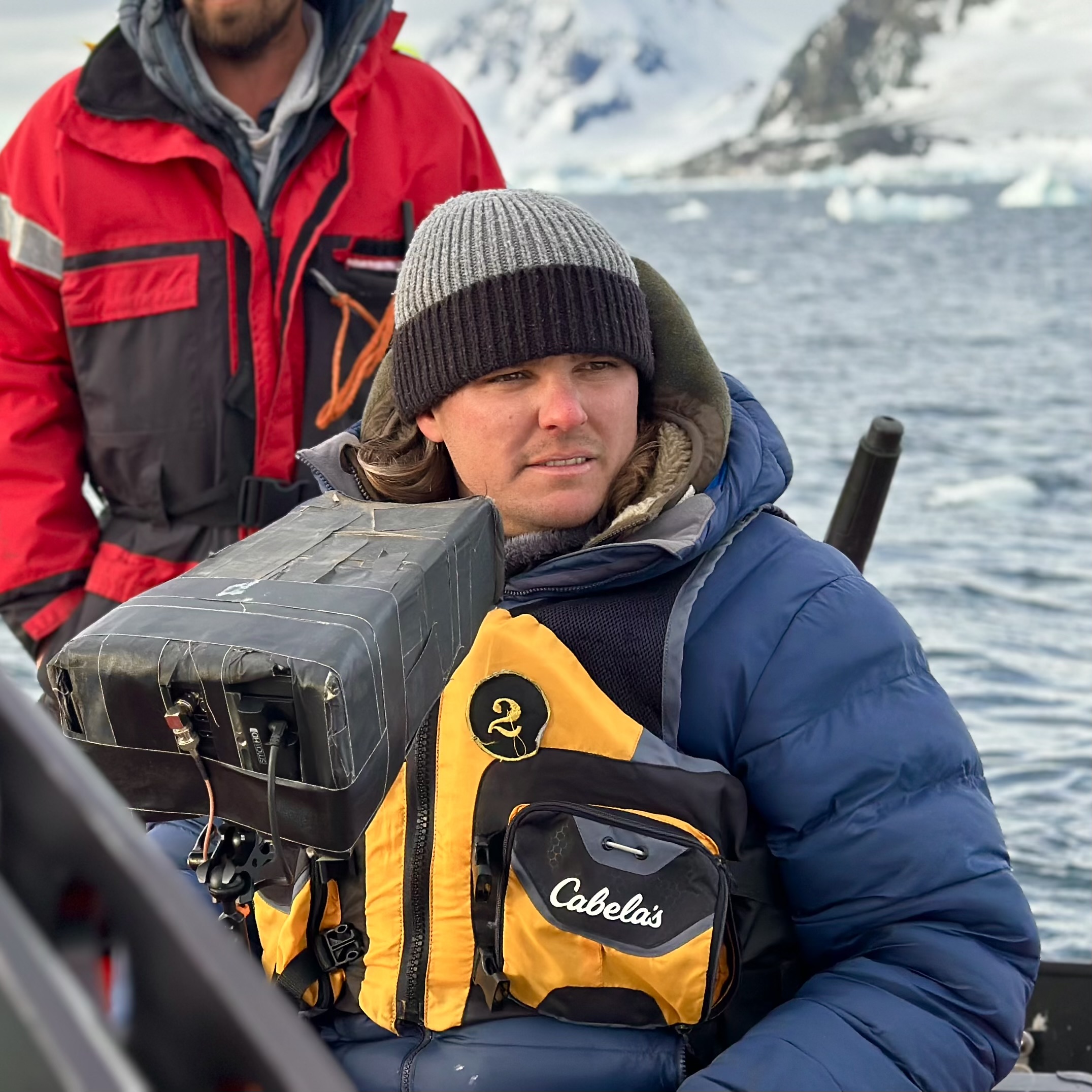
Wildlife filmmaker Tom Walker filming for the BBC’s Expedition Killer Whale on location in the Antarctic.
Tom is blunt about FPV in wildlife: “I just don’t think it should be done, literally. Blanket not done. FPV flying at those speeds, at that proximity not only risks the animal’s welfare, potentially its life if there’s a collision, but also I just think the shots look terrible.”
Faith describes FPV footage she’s seen: “A cheetah hunting, an FPV drone practically on top of it. The impala jumps in the air, the FPV goes below the impala, does a 180 and looks back. It’s disgusting. It’s interfering in the hunt for both the impala and the cheetah. If you crashed a drone into the poor impala which makes it fall down and get eaten – that’s on whoever’s operating that drone.”
The research is clear about what causes disturbance. The question is: who’s paying attention?
What about the tech?
I put these questions directly to the people at DJI. Are they following the research? “We have different projects helping organisations use drones for research purposes,” Yehonatan Richter Levin, their Creative Lead, explained. But on wildlife-filming-specific guidance? The response was more cautious.
“There is no research from our side,” into how DJI’s drones’ acoustic signatures affect different species, Yeho admitted. They’re working on quieter technology, generally: “It’s getting better with time” – but nothing wildlife-specific.
When I mentioned Sara’s point about habituation potentially masking real predators, making animals more vulnerable, the response was honest: “Not really... we didn’t [consider that].”
On developing wildlife-specific guidance about altitude, speed, approach? “To be honest, the reason it doesn’t make sense is that... a lot of it is common sense. It’s like the most basic level of behaving.”
But is it common sense? The footage circulating and getting thousands of likes would suggest otherwise. When I raised the concerning FPV imagery – animals clearly fleeing, stressed – Yeho was firm: “I don’t think FPV is the right tool to shoot wildlife.” Yet, people are using it that way, successfully, on major productions.
DJI’s Matt Bailey emphasised the company’s core principle: “Nature always has priority. If any user ever sees anything in distress, they should land immediately.” It’s the right statement. The question is: how many operators are following it?
The gap is clear: DJI recognises the issues, acknowledges it’s not researching wildlife-specific impacts, believes common sense should prevail, but isn’t taking active leadership beyond being “cautious about the material we post on our social media”.
For a company whose drones have become standard equipment on every wildlife shoot I work on, it feels like a missed opportunity. If nature truly has priority, as Matt stated, shouldn’t this principle be as prominent in its user guidance as in its technical specifications – even if wildlife filming represents only a small segment of its community?
Behind the problem
There’s another layer to this: the disconnect that is created by filming remotely via a monitor screen. Bertie explains: “Unlike when you sneak up on an animal on foot, you have the opportunity with a drone to cause such an extra level of disturbance. If you try to sneak up on a deer and spook it, that deer is going to run away and you can’t pursue it. Whereas with a drone, you have the ability to follow it over the horizon, on and on and on.”
The virtual nature of FPV filming amplifies this: “There’s something very visceral about disturbing an animal when you’re on foot, because you’re seeing it with your eyes. The moment something’s on a screen, you’re in some ways disconnected from it.” He draws a stark comparison of FPV pilots to drone warfare operators – they both share the same moral disconnect.
Wildlife filmmaker Tom Walker, who’s worked extensively with drone operators on major series, echoes the concern: “We should be setting the standard. We shouldn’t be joining the Instagram dopamine-hit people who want one or two clicks and then move on. The reason this industry is so amazing is because we set the standard. If we keep dropping the standard, it’s just going to be a spiral downhill.”
Bertie Gregory, who’s filmed wildlife with drones for over a decade, observes that people aren’t considering the drone’s role in disturbing animals: “I don’t think it even occurs to them that the drone might be the tool making that happen.”
Two approaches
The difference between operators is stark. Anthony walks me through his pre-flight assessment: wind direction, altitude, how vegetation might dampen sound, which animals are behind his subject, what the ranger advises. He considers “10 to 20 risk factors” before every flight.
“If I say this is not sitting right, most times it’s respected,” he explains. He won’t film young cubs or lone mother elephants with babies because “no matter how beautiful the lighting is, if it causes harm to their relationship, I wouldn’t want to affect that.”
Sara’s “giant bubble” approach, Anthony’s 10–20 factor risk assessment, their careful reading of behavioural cues – this is what ethical operation looks like.
Bertie echoes this careful approach. His process of drone habituation with pumas and wolves takes weeks: “I spend a huge amount of time with those animals, with those individuals, flying a very long way away from them so they can hear it, so they get used to it over time. And then I bring it closer and closer and closer.”
It’s the same principle as vehicle habituation with lions – done properly, over time, with patience. “The drone, inherently, is not a disturbance tool,” Bertie explains. “It is a tool for getting the camera into a position that allows you to film the animal. There is a right way and a wrong way.”
But he adds an important caveat about predator filming: “Often the predators are very tolerant, but the prey is not. So, people will assume that when you’re following the predator, if the predator’s relaxed, you’re not causing any disturbance, but actually you’re just constantly spooking its prey.”
For Bertie, the combination of skills required is non-negotiable: “You need to be good at flying drones. You need to have a good eye and a good editorial mind – so often, we see people going for glory rather than story. And the third thing, which I think is often where lots of people fall down, is you need a really good knowledge of animal behaviour.”
I reached out to Ellis Huber, a talented FPV pilot who sometimes works with wildlife. His approach is from another angle completely. When I asked how, at 120km/h, he can distinguish natural behaviour from stress responses, he was blunt: “You cannot, right? You cannot. There is no way.”
His method: fly over quickly, once, then leave. He stops when animals “start scattering” – not because it’s stressful, but because, as he put it, “it just doesn’t look nice”.
When I raised the matter of research showing operators at high speed cannot assess animal welfare, he didn’t disagree. “Cool shot but a lot of stress for the animal tho... Lots of energy to burn for likes.”
Two approaches to boundaries
Faith is clear about her priorities when hiring: “The most important thing is making sure you’re using a drone operator that is experienced in filming wildlife. People assume, ‘Oh, it’s a drone pilot, of course he or she’s filmed wildlife’ – but that’s often overlooked.”
When an operator crosses her line? “I’m categorical. This is what we’re not going to do. It’s black and white for me.”
Faith’s perspective on boundaries is unwavering: “I will always think of the animal’s welfare first. Even if you’re right on top of the animal, you’re still going to want to be closer. So, I’ve got a boundary I’m not going to cross.”
Faith raises something rarely discussed: “I always respect a drone pilot that refuses to fly if they see the drone is affecting the animal negatively – and lands it, even when the producer is going, ‘No, no, habituate the animal’. The choice they make is better for that animal and that ecosystem.”
On FPVs specifically, Faith is direct and points to their creative use in Green Planet: “High-speed hyperlapses bringing plants to life. That’s creative. You’re not disturbing any animals.” But around wildlife? “Anyone that introduces a lack of harmony and unrest for the animals – that’s a no-no.”
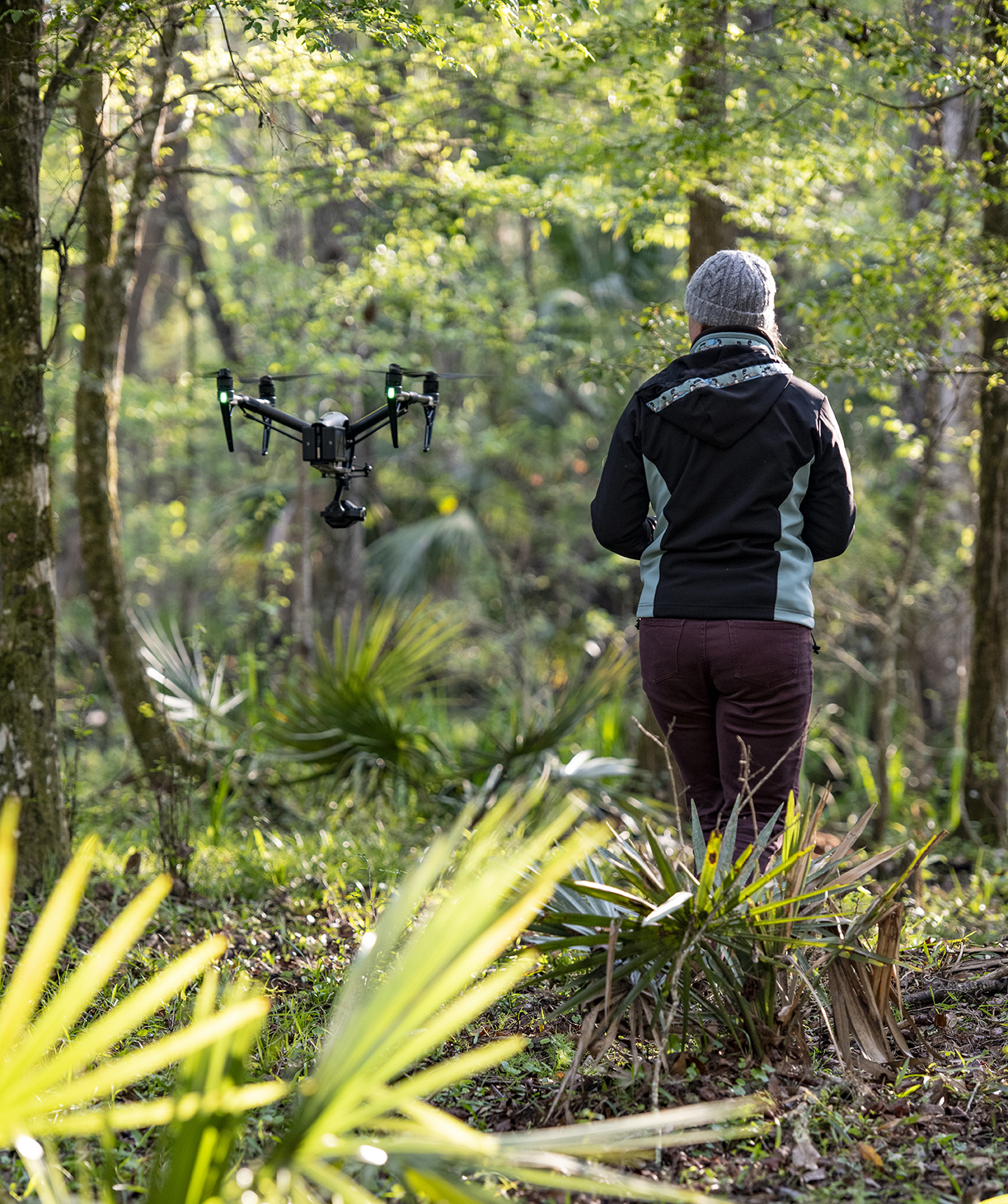
Wildlife cinematographer Sara Matasick filming in Florida for Earth Moods, a slow-TV drone show for Nat Geo/Disney+.
Sara Matasick emphasises the risk of normalisation: “If unethical drone practices are normalised, then people will continue to push the limits... As professionals, we have to hold ourselves to the highest standards and set the example.”
Bertie’s advice to anyone considering flying drones around wildlife is clear: “Please make sure you consider whether you have sufficient experience, knowledge and thought to be doing it. If you can’t tell the difference between natural behaviour and behaviour elicited by the drone, then please don’t do it.”
Should there be industry-wide standards? Every person I spoke to had thoughts, though no consensus on enforcement. What’s clear is that ‘common sense’ means different things to different operators – and relying on individual judgement when the spectrum is this wide isn’t working.
Tom’s warning: “I’m not sure it’s getting worse – I think it’s just becoming more normal or more accepted, which is a bit scary.”
The choice is ours
This last few weeks’ exploring drones from different perspectives has been revealing. I wanted to know more about drones as a long lens cinematographer. But the deeper I got, the more I realised this isn’t really about drones versus long lenses, or even about wildlife filming specifically. It’s about something fundamental to our craft: are we thinking about what we’re doing, or are we just chasing the shot?
My mentor taught me never to disturb intentionally. That was with long lenses, but the principle holds. The operators doing drone work ethically have internalised the same lesson. They prove every day that you can get spectacular footage whilst respecting wildlife.
The research backs this up with data. The technology exists to minimise harm. The knowledge is out there about species-specific sensitivity, safe distances, acoustic impact. The ethical framework is clear.
So, why isn’t it universal?
The answer, I think, is uncomfortable: because we let the algorithm, the commissioners, the competitive pressure, and the pursuit of ‘never-before-seen’ override what we know is right.
But here’s what gives me hope: every ethical operator I spoke to is succeeding. They’re getting commissioned, winning work, building reputations on a skill that respects both the story and the subject. They’re proving there’s another way.
We got into this profession because we’re in love with nature and storytelling. The best of us know these things aren’t in conflict – they’re inseparable. A story told with patience and respect will always be more compelling than footage extracted at the animal’s expense.
DJI sent me a Mini 4 Pro drone after our interview – a generous gesture that will add another layer to my perspective. “It’s a great tool, if you know what you’re looking to do with it,” Yeho said. He’s right.
But that’s the question this article raises: do we know what we’re doing with these tools? Do we understand the impacts? Are we prioritising the animals, or the shot?
Technology has given us unprecedented access to the natural world. The question is whether we’re worthy of that access – or whether we’re in danger of loving it to death.
The evidence is in. The question now is: what will we do with it?
*The research paper ‘Impact of Drone Disturbances on Wildlife: A Review’ by Saadia Afridi et al, featured in Drones, can be found at mdpi.com/2504-446X/9/4/311.
Originally published in Zerb, the magazine of the Guild of Television Camera Professionals, Issue 102, Spring 2026. gtc.tv
Sophie Darlington
Sophie Darlington ASC is a wildlife cinematographer with 35 years’ experience filming for BBC, Disney, National Geographic and Netflix amongst others. Instagram: @sophiedarlingtondop